
Every December, millions of corporate gifts are distributed, and a considerable portion ends up in the bin before February. That’s why the Christmas gift has become a sensitive point for any company that talks about sustainability in its annual report: it’s where discourse is contrasted with actions, and where it’s easiest for someone to notice the contradiction.
The difficulty is that «eco» means nothing by itself. This guide helps you distinguish what is genuinely sustainable from what merely appears to be.
Before looking at materials, ask yourself: will this actually be used?
It’s uncomfortable, but a bamboo object that ends up in the bin in January has a worse footprint than a plastic object used for five years. Manufacturing anything consumes resources, and the only way to offset them is through repeated use.
That’s why the first sustainable decision isn’t about material; it’s about genuine usefulness. Everything else comes after.
These certify what they claim and are verifiable by a third party:
In contrast, terms like «ecological», «natural», «green» or «environmentally friendly» are not regulated. Anyone can use them without substantiating anything.
Without specific material. If the description says «sustainable materials» but doesn’t specify which ones or in what proportion, be suspicious. A genuinely eco product declares its composition.
Green and kraft everywhere. Colour isn’t a certification. There are virgin plastic products with brown cardboard packaging and a printed green leaf.
«Recyclable» instead of «recycled». They’re not the same thing, far from it. Almost everything is theoretically recyclable; what matters is whether it’s made from recovered material.
One eco component among ten that aren’t. A ballpoint pen with a bamboo clip and virgin plastic body isn’t a bamboo pen.
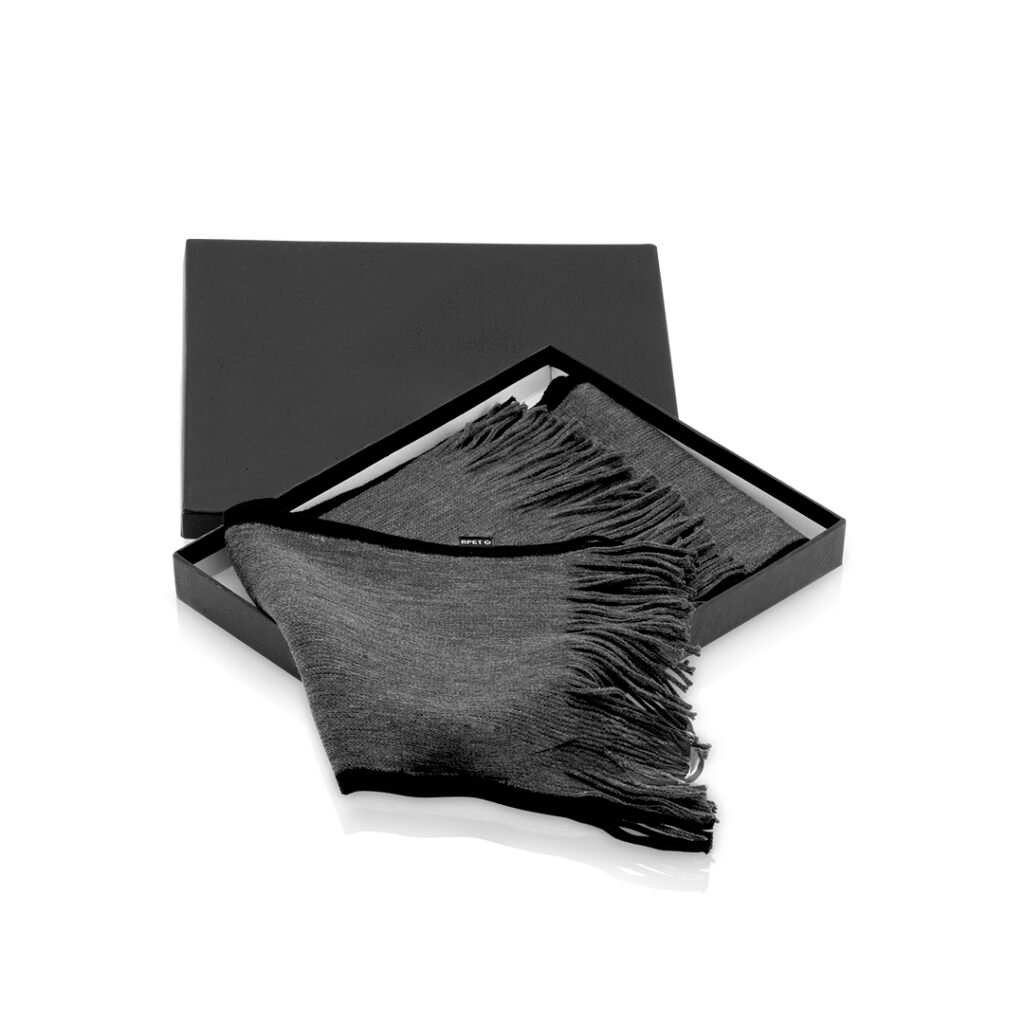
rPET: manufactured from recovered plastic bottles. It removes containers from the waste stream and avoids producing virgin polyester from oil. Works very well in rucksacks, winter textiles and bags.
Organic cotton: grown without pesticides or synthetic fertilisers. It protects soil, water and those working in cultivation. With GOTS certification, it’s among the most solid options in textiles.
Bamboo: regenerates without replanting and reaches full size in just a few years. It replaces plastic in accessories without losing durability.
Cork: extracted by peeling the bark of cork oaks without felling them. The tree regenerates and produces bark again every nine years, absorbing more CO₂ while it recovers.
Recycled stainless steel: remelted without losing properties, indefinitely, using a fraction of the energy required to produce it from ore.
A certified product is of little use inside a plastic blister pack. Look for recycled cardboard, avoid single-use plastic and be wary of excess filler. And if the gift is sent by courier, consolidate shipments whenever you can: transport carries far more weight in the final footprint than people assume.
If you have to choose between a product with better certification and one your recipient will use more, choose the second. Prolonged use almost always outweighs the difference in material, and it also avoids the sense of a gift bought just for appearances’ sake.
Our entire catalogue is built on that foundation: more than 4,500 products analysed and only around 1,400 pass the filter, all with declared material and the certification stated where they have one. You can see our Christmas selection for gifts for clients and gifts for employees.
If you want to go deeper, we have a complete guide to eco certifications and an article on how to avoid greenwashing.
This article is part of our complete guide to corporate gifts for Christmas 2026.
At Greenly, we personalise over 1,400 certified eco products (GOTS, GRS, OEKO-TEX) with your company logo. Free mockup within 24 hours, from 25 units and no obligation.
Certifications · Sustainable materials · Eco Christmas gifts
Tell us what you need and we'll prepare a bespoke proposal within 24 h.
Request a quote